ATEX
ATEX Basics for Pumps and Electric Motors
ATEX is essential when pumps and motors operate in potentially explosive atmospheres. For pump packages, ATEX is not only about the motor. The complete pump set must be suitable for the hazardous area.
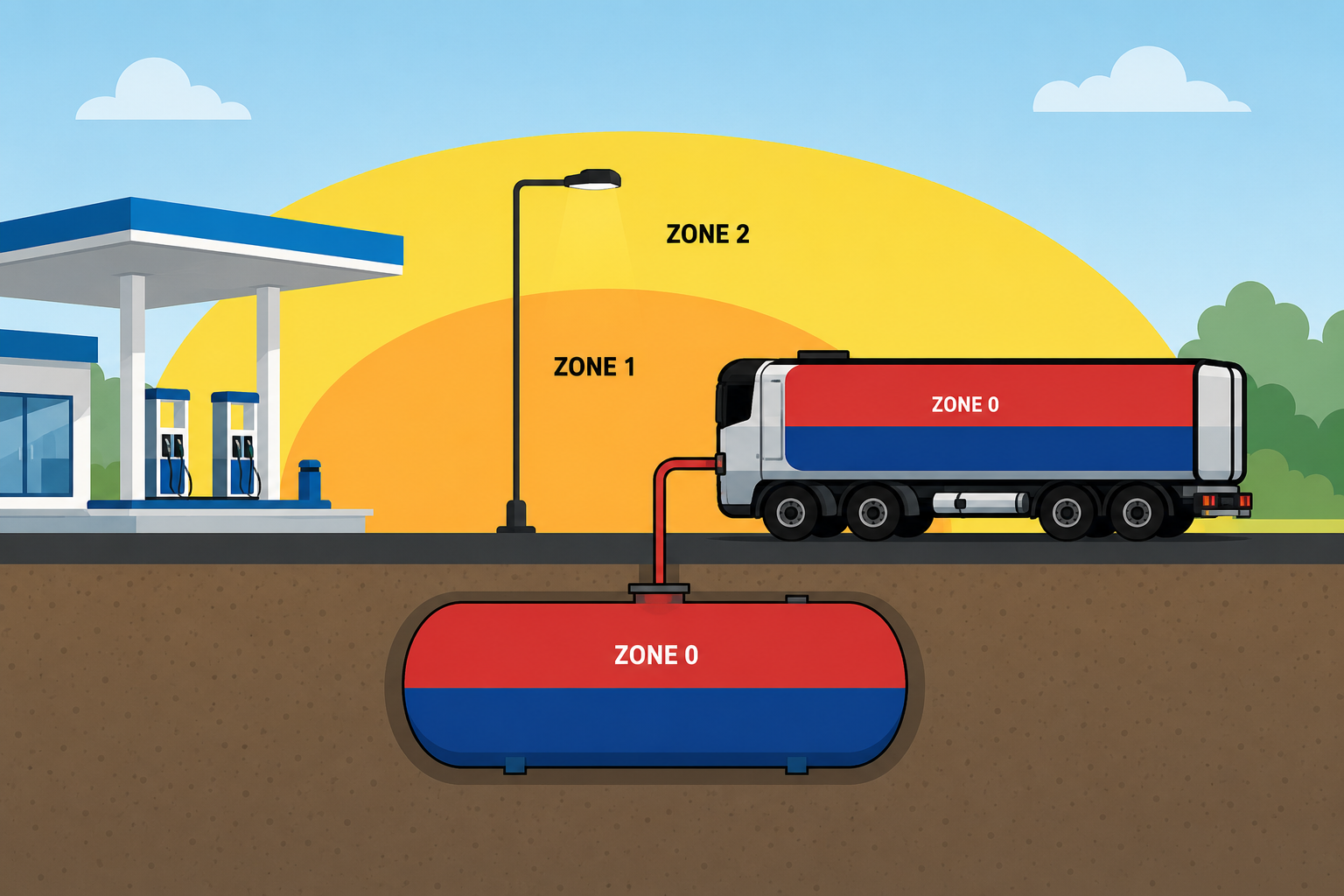
Illustrative ATEX zone example for flammable atmosphere risk around fuel transfer and storage equipment.
What is ATEX?
ATEX is the European framework for equipment and protective systems used in potentially explosive atmospheres. In practice, it defines how equipment must be selected and marked when flammable gases, vapors, mists or combustible dusts may be present.
Why ATEX matters for pumps
Pumps can create ignition risks through hot surfaces, mechanical friction, bearing failure, static electricity, dry running, coupling failure or incorrect instrumentation. The motor is important, but it is only one part of the complete pump set.
Gas and dust zones
| Gas zone | Dust zone | Meaning |
|---|---|---|
| Zone 0 | Zone 20 | Explosive atmosphere is present continuously, for long periods or frequently. |
| Zone 1 | Zone 21 | Explosive atmosphere can occur occasionally during normal operation. |
| Zone 2 | Zone 22 | Explosive atmosphere is not likely during normal operation and, if it occurs, it persists only for a short time. |
Typical ATEX equipment categories
- Category 1 — suitable for Zone 0 / Zone 20,
- Category 2 — suitable for Zone 1 / Zone 21,
- Category 3 — suitable for Zone 2 / Zone 22.
ATEX for electric motors
For motors, the key items are usually zone classification, gas group, temperature class, type of protection, ambient temperature, VFD operation, motor/inverter compatibility and certification documents.
ATEX for pumps
For pumps, ATEX review should include pump mechanical design, surface temperature limits, bearing temperature risk, coupling and coupling guard, mechanical seal arrangement, dry-running protection, minimum flow protection, instrumentation and grounding.
Temperature class
| Temperature class | Maximum surface temperature |
|---|---|
| T1 | 450 °C |
| T2 | 300 °C |
| T3 | 200 °C |
| T4 | 135 °C |
| T5 | 100 °C |
| T6 | 85 °C |
Common mistakes in pump RFQs
- Specifying only “ATEX motor” and forgetting pump ATEX marking.
- Changing Zone 2 to Zone 1 late in the project without checking motor and pump suitability.
- Using VFD without checking Ex motor / inverter certification.
- Forgetting temperature class in hot liquid service.
- Ignoring mechanical seal and dry-running risks.
- Assuming all accessories are automatically suitable for hazardous area.
Practical RFQ checklist
Ask the client to specify
- Gas or dust atmosphere
- Zone classification
- Gas group / dust group
- Temperature class
- Ambient temperature
- Area classification drawing or hazardous area schedule
- VFD operation yes/no
- Required certificates and documentation
Final recommendation
For pump packages in hazardous areas, ATEX must be reviewed as a complete system: pump, motor, coupling, seal, instrumentation, accessories and operating conditions. Always check the purchaser specification and the actual area classification.